

































Italian charm bracelets work on a wonderfully simple spring-link system: every charm is a flat stainless-steel link that stretches open, hooks onto its neighbours and snaps shut — no clasp, no tools, no trip to the jeweller. Once you understand how Italian charm bracelets work, adding a new charm, removing an old one or resizing the whole band takes about ten seconds. This guide walks through the mechanism, the assembly steps and the sizing, so your first build feels effortless.

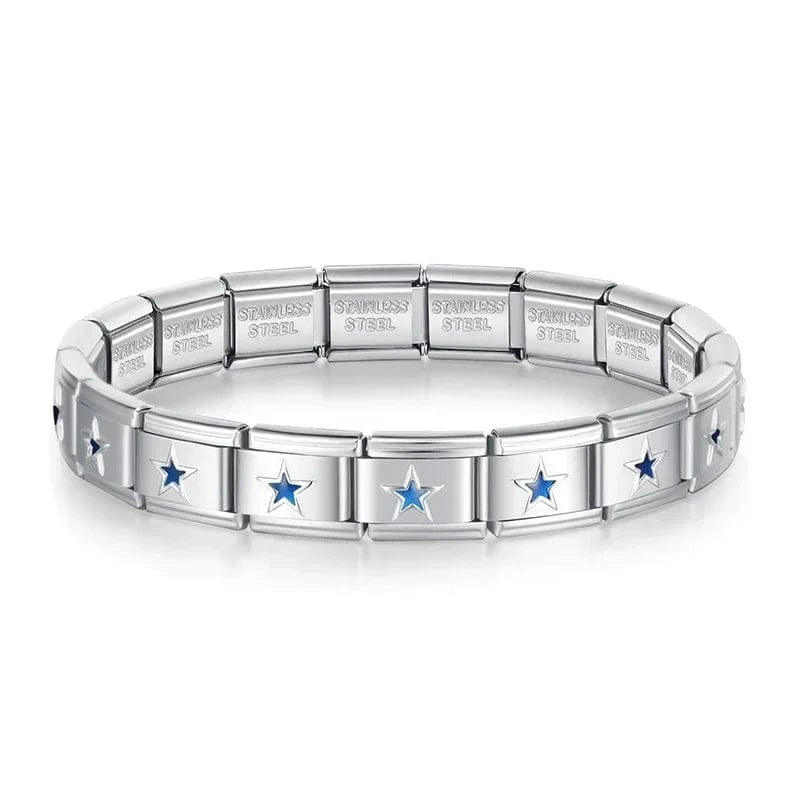
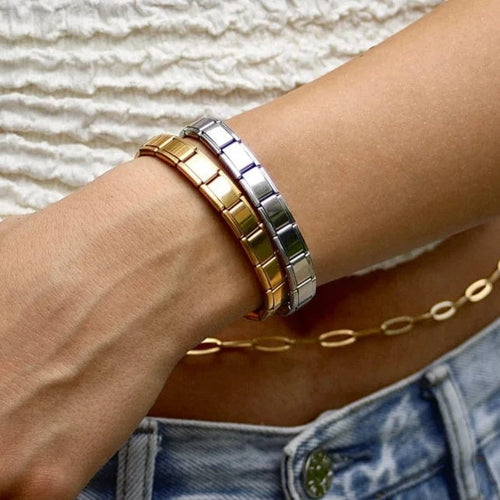
A classic 18-link bracelet — every link is removable and replaceable.
The quick version
- The system: around 18 modular links sit side by side on spring-loaded hinges to form one stretchy band.
- Adding a charm: stretch two links apart, hook the new charm on, press it closed.
- Sizing: there is no clasp — you size the bracelet by adding or removing links.
How Italian charm bracelets work: the spring-link system
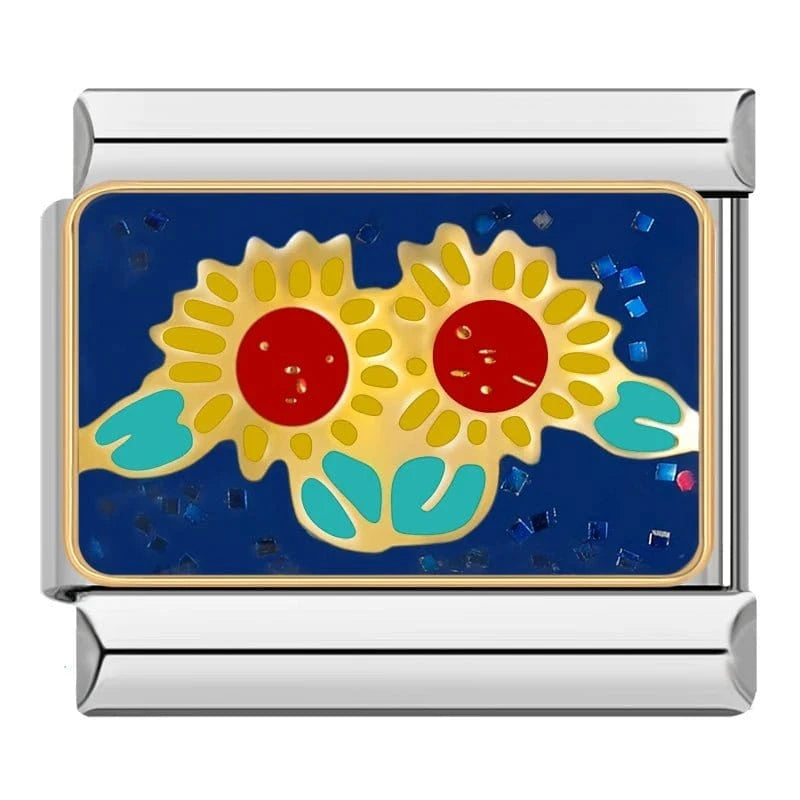
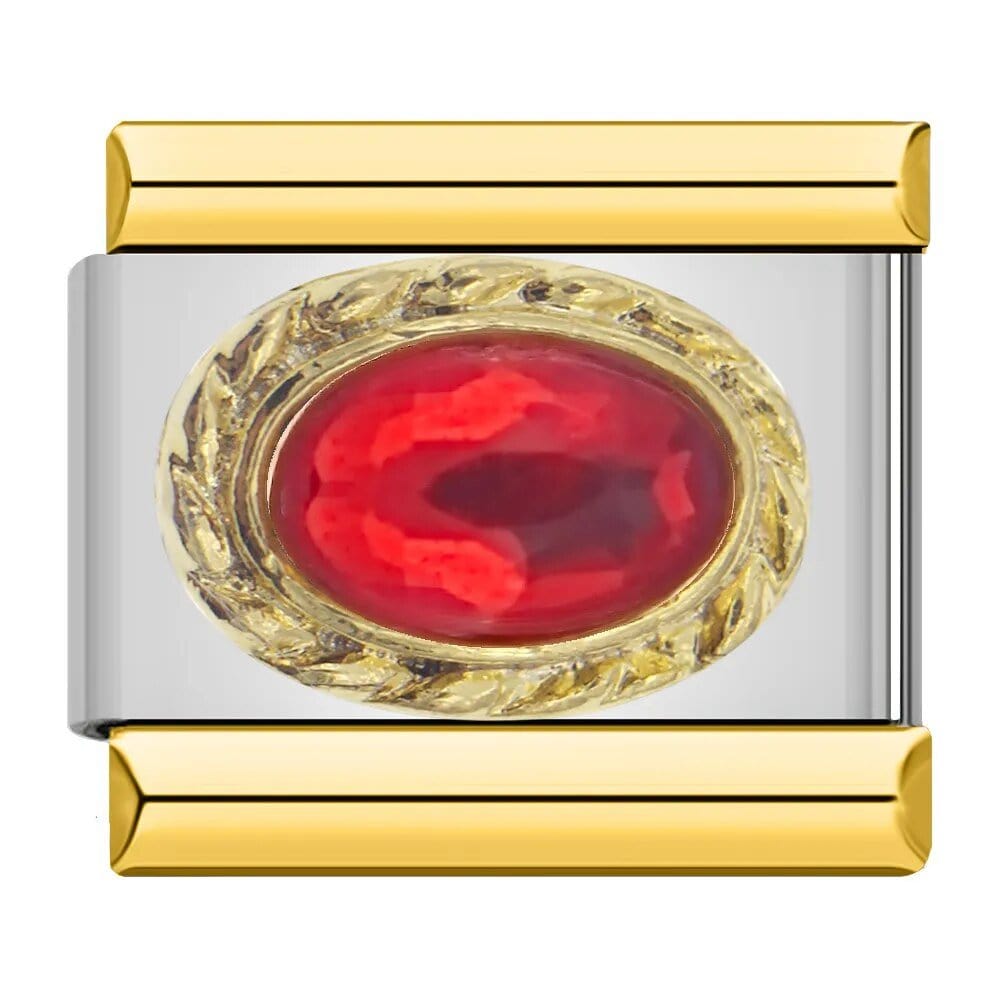
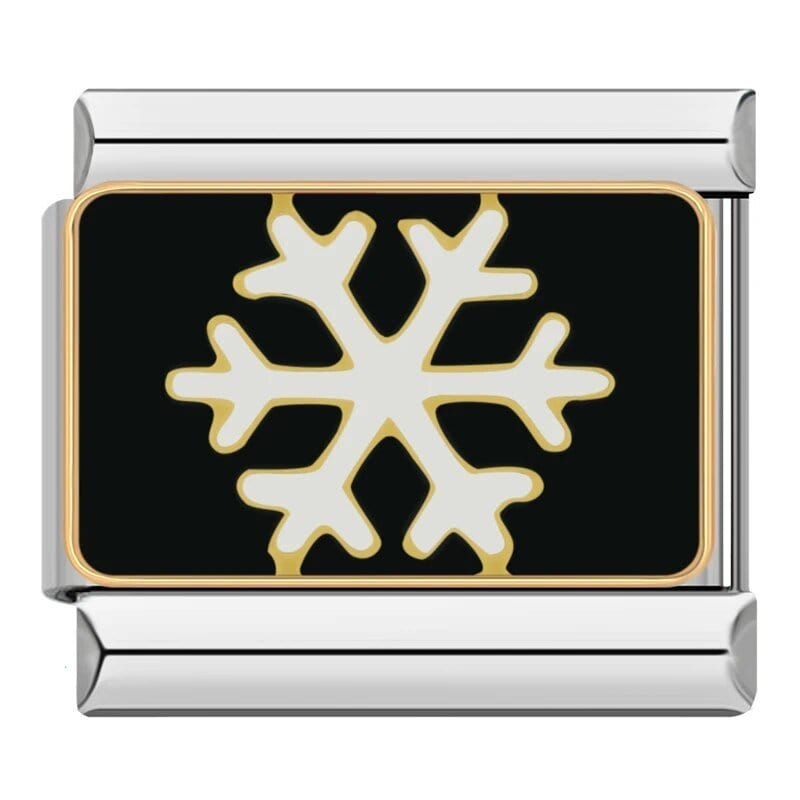
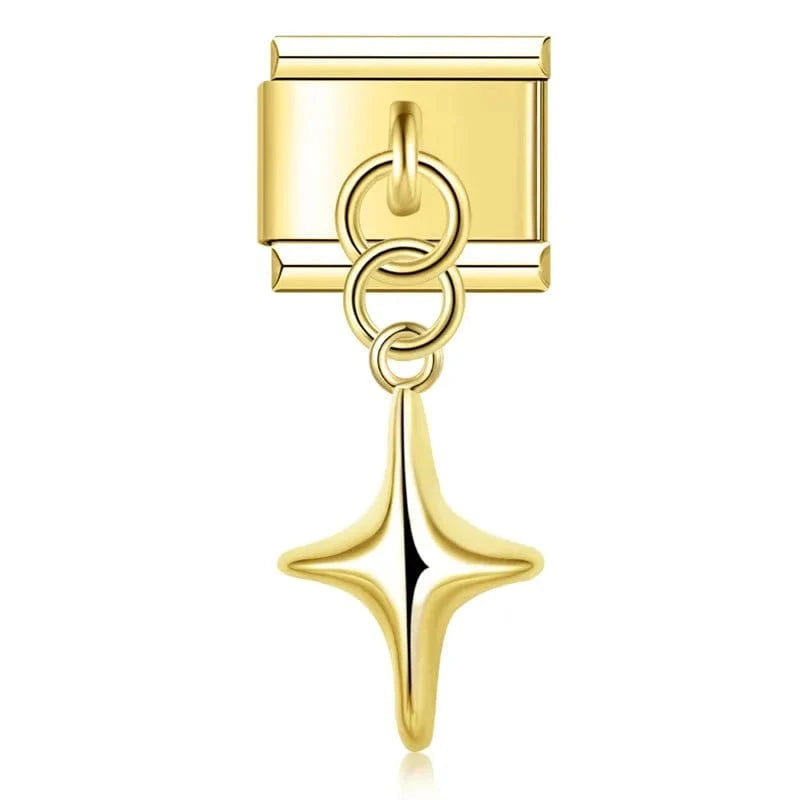
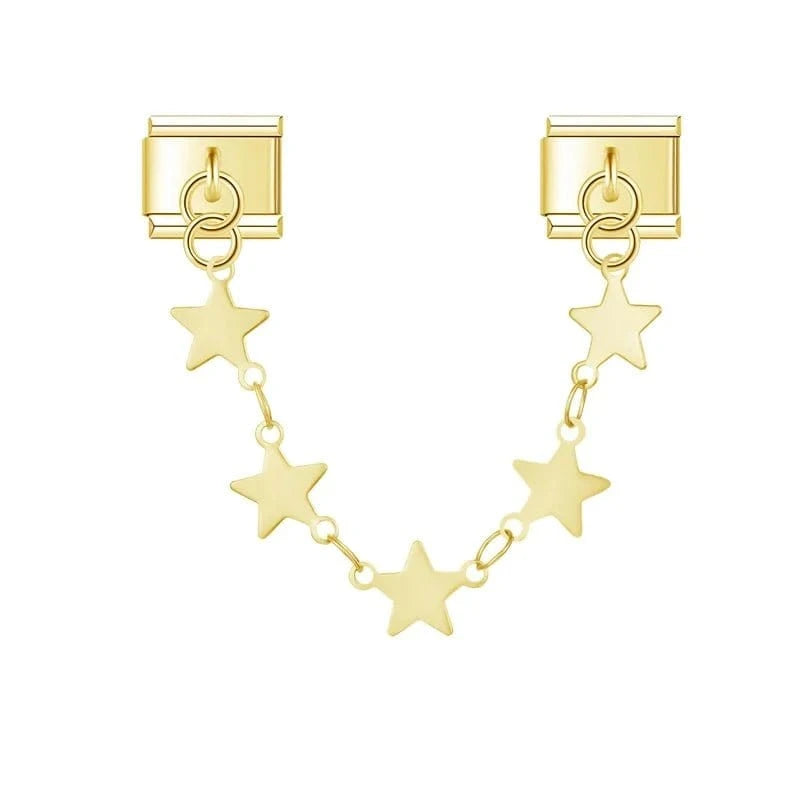
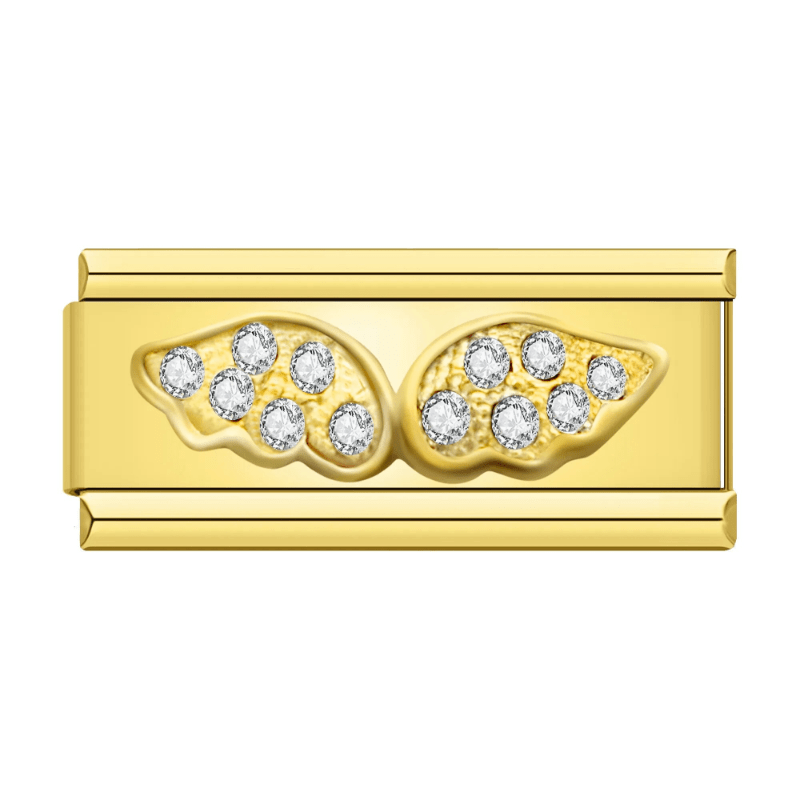
Every Italian charm has two parts. On the front is the face plate — the little rectangle carrying the design, whether that is a letter, a zodiac sign or a daisy. On the back is a hinged connector with a tiny spring inside. The spring keeps constant tension, so each link grips the next one firmly while still letting the whole band flex and stretch.
Because every link is the same width, the connected charms form one smooth, flat band that hugs the wrist. There is no chain and no clasp: the bracelet stretches just enough to slide over your hand, then settles back snugly. That spring tension is also what lets you rearrange charms endlessly without ever weakening the bracelet.
If you are brand new to the style, our beginner guide What Are Italian Charms? covers the history and design options — this article focuses on the mechanics.
Adding and removing charms: 4 easy steps
Here is the full assembly routine. With a little practice it takes seconds:
Flip the bracelet over and pick the seam between the two links you want to separate.
Hold a link on each side and pull gently — the spring gives and the hook releases.
Unhook the link you are replacing and hook the new charm into the same spot.
Press the connector flat between finger and thumb until you feel it click closed.

The dismantle tool levers a link open in one motion.
Sizing: how many links do you need?
Because there is no clasp, sizing an Italian charm bracelet means choosing the right number of links. The band needs to stretch over your hand, then sit comfortably — able to rotate freely without sliding off. Measure your wrist with a soft tape (or a strip of paper you mark and measure), then use this as your starting point:
| Wrist size | Links needed | Fit |
|---|---|---|
| Under 6 in (15 cm) | 16–17 links | Snug, petite wrists |
| 6–7 in (15–18 cm) | 18 links | The standard — fits most adults |
| Over 7 in (18 cm) | 19–21 links | Relaxed, roomier fit |
A starter like the Classic Italian Charm Bracelet arrives as a full band of blank links, so you can wear it immediately and swap in picture charms one at a time. Keep any blanks you remove — they are your spares for resizing later, and handy if you gift charms to a friend with a bigger wrist.

A well-sized band rotates freely on the wrist without sliding over the hand on its own.
Will any charm fit? Compatibility in 30 seconds
Italian charms come in two widths, and width is the only compatibility rule that matters. 9mm is the classic standard — the size of most bracelets and the vast majority of charms sold today. 13mm (sometimes called mega) links are taller and chunkier, made for statement bracelets. Same-width links click together regardless of brand, because the spring-hook mechanism is universal.
What you cannot do is mix the two widths on one band — a 9mm link has nothing to grip on a 13mm connector. Check your bracelet width once, and every charm decision after that is easy.
Build it link by link
Once the base bracelet fits, the fun starts. Most people keep a rotation: a few permanent charms that never leave the band, and open slots that change with the season, an outfit or a mood. These are the three most-loved places to start:


Frequently asked questions
Comfortably snug: it should rotate freely around your wrist and admit a finger underneath, but not slide over your hand on its own.
No — the stretch comes from steel springs inside each connector, not from an elastic cord, so the tension stays consistent for years of daily wear.
No. The two widths use different-sized connectors and will not lock together. Build each bracelet in a single width.
Hands are enough once the springs loosen slightly with use. A dismantle tool makes brand-new bracelets much easier to open and protects your nails.
Now you know how it works
Grab a base band, pick your first links, and start snapping your story together.
Shop all Italian charmsGet a starter bracelet