

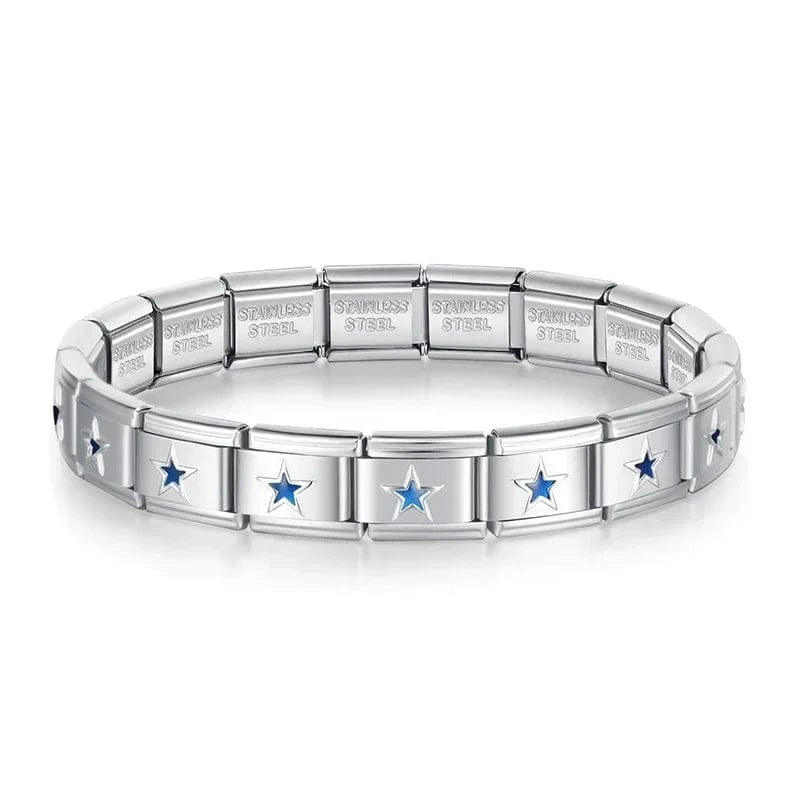
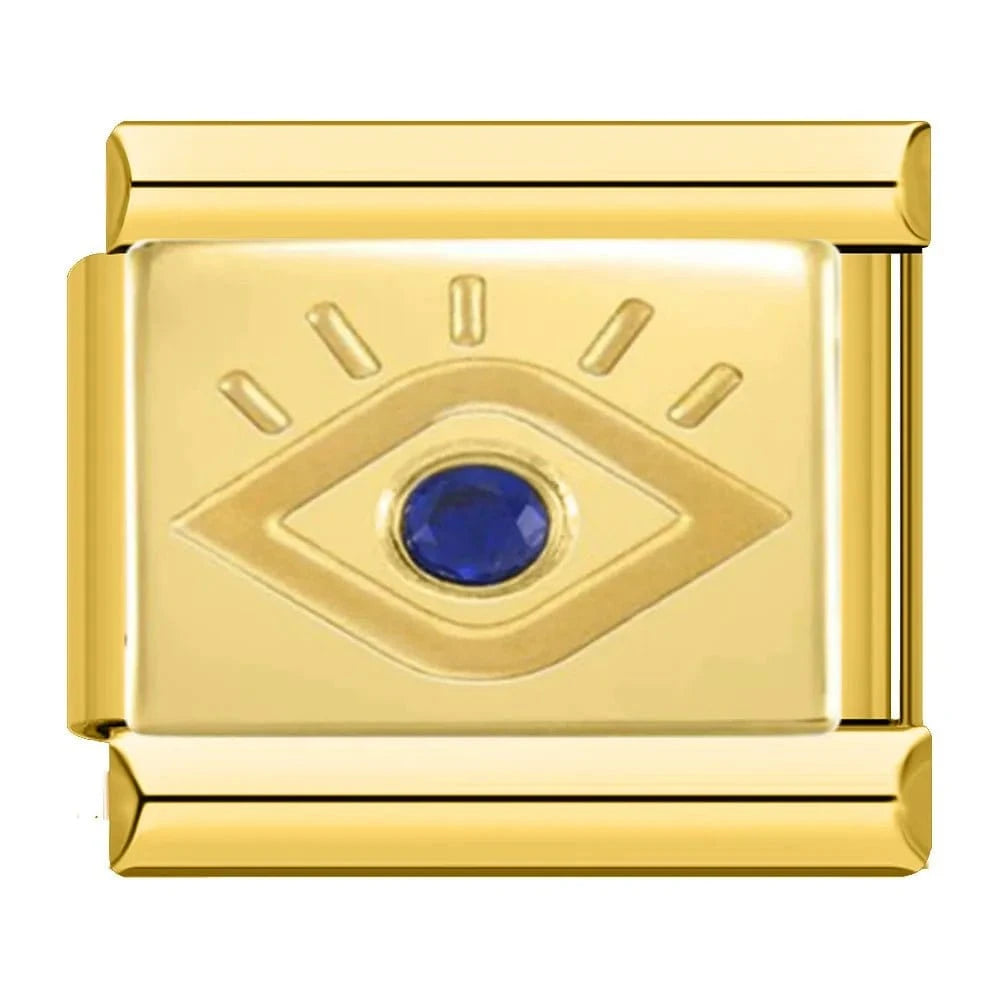

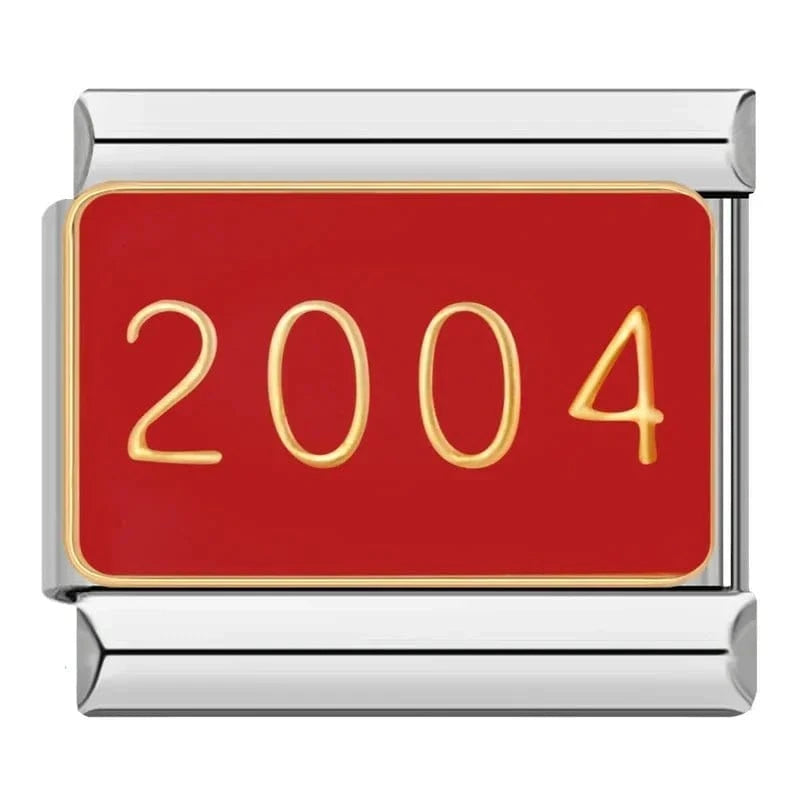




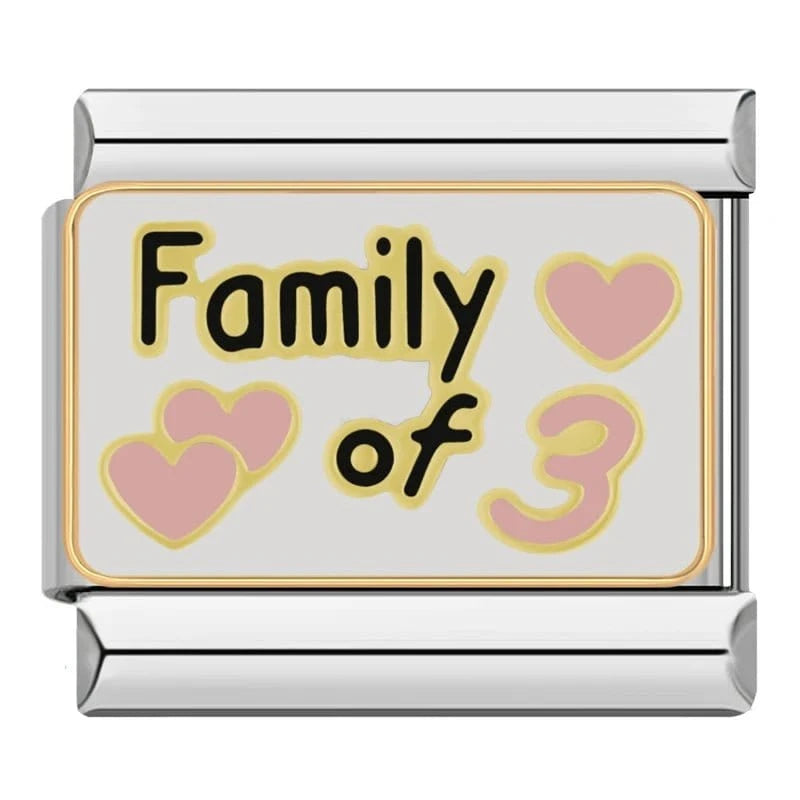












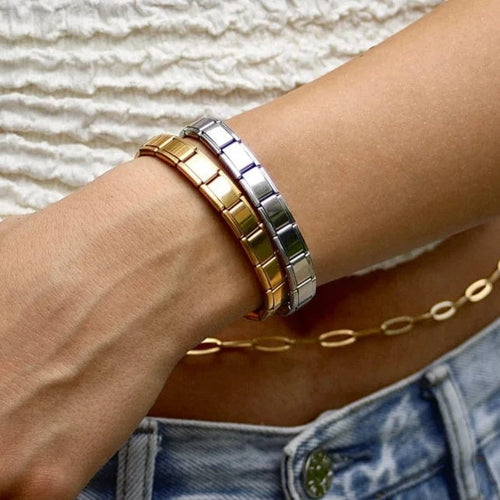



Long before it was a TikTok obsession, the Italian charm bracelet was the most-wanted accessory in every early-2000s mall. If you were a teenager in the Y2K years, you almost certainly remember them: a stretchy steel band of tiny square tiles, each one a letter, a birthstone, a flag, a smiley. You collected them, traded them, and spelled out your name across your wrist. Then, almost overnight, they vanished — until Gen Z pulled them back into the spotlight. This is the full story of where the Italian charm bracelet came from, how it conquered the 2000s, and why it's having its biggest moment in twenty years.
It's a surprisingly good origin tale — one that starts not in an American mall at all, but in a small metalworking town outside Florence.
A single Italian workshop, 1987
The format was invented in 1987 in Sesto Fiorentino, Italy, by the jewelry house Nomination. At the time, 'charm bracelet' meant little trinkets dangling from a chain. Nomination did something radical: it made the charm the chain. Each charm was a small, flat, stainless-steel tile that snapped to its neighbours through a patented spring-and-track mechanism, forming one continuous elastic band that hugged the wrist like a watch.
That one idea changed everything. Because every tile was the same size and connected the same way, a bracelet was no longer a finished object you bought — it was a modular canvas you built and re-built forever. Want to add a new initial? Swap one out? Grow it a link? Easy. That 'start small, add as you go' DNA is exactly what makes the format so collectible, and it's the same principle behind every bracelet we sell today. (New to how the links actually click together? Our guide on how Italian charm bracelets work breaks down the mechanism.)
The timeline: how a little link became a landmark
From a Tuscan workshop to a global phenomenon and back again, the Italian charm bracelet has lived several lives. Here's the whole arc at a glance.
Born in Tuscany
Nomination launches the 'Composable' bracelet in Sesto Fiorentino. The modular link — a flat steel tile instead of a dangling trinket — is a genuine jewelry-world first.
Crossing the Atlantic
American tourists spot the bracelets in Italy and bring them home. Word spreads, demand builds, and the style earns the name it still carries in the U.S.: the Italian charm bracelet.
The Y2K peak 🌟
The bracelet becomes a must-have, especially for teens and tweens. Mall kiosks sell single links by the tray: monogram initials, birthstones, zodiac signs, flags, sports teams, tiny enamel novelties. Your bracelet was your personality — spelled out one tile at a time.
The quiet years
Fashion moves on to bangles, beads and minimalist gold. The Italian charm bracelet doesn't disappear so much as retreat — tucked into jewelry boxes, waiting, holding a decade of memories in steel.
The revival, powered by TikTok
Boosted by social media and TV shows like Love Island, the bracelet goes viral. Gen Z — deep in its Y2K nostalgia era — 'rediscovers' it, and #italiancharmbracelet racks up millions of views as a new generation starts stacking.
The keepsake era
Today the charm bracelet is a fixture on summer-2026 trend lists — but the mood has shifted from 'collect them all' to 'mark what matters.' It's less about the logo, more about the story on your wrist.

Why the Y2K charm bracelet came back
Nostalgia lit the match, but it isn't the whole story. Two bigger forces are keeping the Italian charm bracelet on trend well past a passing fad.
First, Gen Z's love of the early 2000s. Like low-rise denim, baby tees and butterfly clips, the charm bracelet is a genuine artefact of the Y2K aesthetic — and this generation treats those years as vintage gold. The difference is that a charm bracelet isn't just referencing the era; it's the actual object, doing the exact same job it did in 2003.
Second, and more importantly, the way we buy jewelry has changed. The 2026 mood is meaning-driven personalization — 'fewer pieces that truly mean something' — and few things say that better than a base you slowly fill with charms that mark trips, milestones and people. It's the same instinct powering the wider charm boom (a market worth well over $10 billion and still growing). We dug into that shift in are Italian charm bracelets still popular in 2026? — the short answer is a resounding yes, and this time it looks built to last.
💾 BUILD AN AUTHENTIC Y2K STACK
Want the real 2000s look? Keep it personal, not themed. A classic starter set: your initials from our Letters & Numbers, your birth month, a lucky number, and one fun novelty tile — a heart, a star, a little something that makes you smile. That mix of meaning + whimsy is the Y2K formula.

How to wear the revival in 2026
The good news for anyone rejoining the trend: the format never actually changed, so a bracelet you loved in 2004 works perfectly today. What has evolved is the styling. A few ways collectors are wearing it now:
- Stack it thin. Instead of one crowded band, wear your charm bracelet alongside a delicate chain or a watch. The 2026 look is layered and lived-in, not maximal.
- Mix metals on purpose. Blending silver and gold links reads intentional and modern — the old 'match everything' rule is gone.
- Tell a story, not a theme. The most-loved bracelets today aren't perfectly coordinated; they're a scrapbook — an initial, a zodiac sign, a travel flag, a heart for someone special.
If you're starting from scratch, don't overthink it. Pick a base, add three or four charms that actually mean something to you, and let the bracelet grow from there — exactly the way it was designed to back in 1987. Brand new to the whole thing? Our complete beginner's guide to Italian charms is the perfect place to start.
Shop the throwback


Italian charm bracelet history: quick answers
Who invented the Italian charm bracelet?
The Italian jewelry house Nomination, which launched the modular 'Composable' link bracelet in 1987 in Sesto Fiorentino, near Florence. It replaced dangling charms with flat steel tiles that snap together side by side.
Why are they called 'Italian' charms?
Because the modular link format was created in Italy. American tourists discovered the bracelets there in the 1990s and brought them home, and the name 'Italian charm bracelet' stuck as the style took off in the U.S.
When were Italian charm bracelets most popular?
Their first peak was the Y2K years, roughly 2000–2006, when they were a mall staple for teens. Their second peak is happening right now, revived from 2023 onward by TikTok and Gen Z's love of the 2000s.
Are Italian charm bracelets still worn in 2026?
Very much so — they're a fixture on 2026 jewelry-trend lists, this time framed around meaningful, keepsake-style personalization rather than collect-them-all novelty.
Four decades after that first link snapped into place in Tuscany, the Italian charm bracelet is still doing the one thing it was built to do: turn a personal story into something you can wear. The names on the wrists have changed. The little steel tile hasn't.
Your era. Your story. Your wrist.
Start your own charm bracelet the way it began in 1987 — one meaningful link at a time.
Customize Your Bracelet →A note on history: dates and milestones above reflect the widely documented story of the Italian (Nomination-style) charm bracelet and its 2000s and 2020s popularity. Exact timelines can vary by source and region.